Adobo
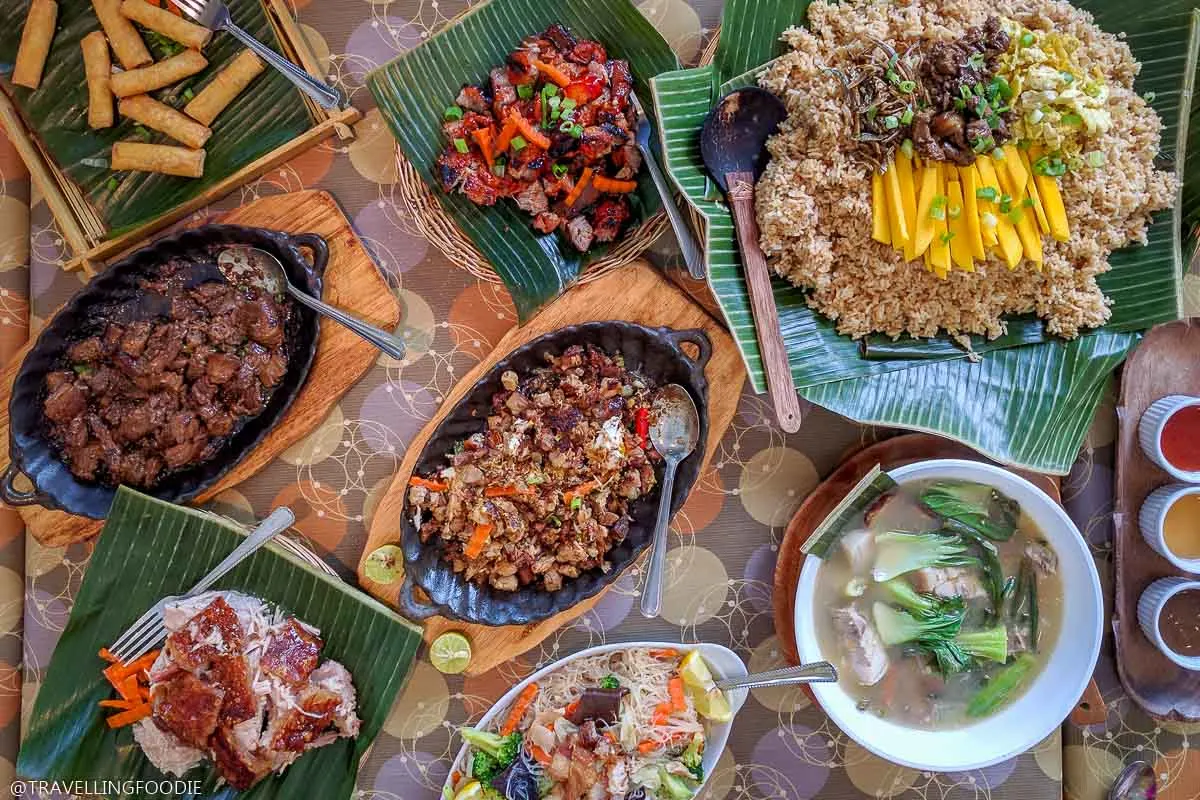
A popular Filipino dish and cooking process in Philippine cuisine Read more
Filipino cuisine offers a diverse range of dishes, blending indigenous flavors with influences from Spanish, Chinese, and American culinary traditions. Some popular and iconic Filipino foods include adobo, lechon, sinigang, and pancit. These dishes, and many others, showcase the rich tapestry of flavors and techniques that define Filipino food.
:max_bytes(150000):strip_icc()/Filipino-Grilled-Chicken-FT-MAG-RECIPE-0524-7be1888e18764b7f9e7d2351bb1f8702.jpg)

A popular Filipino dish and cooking process in Philippine cuisine Read more
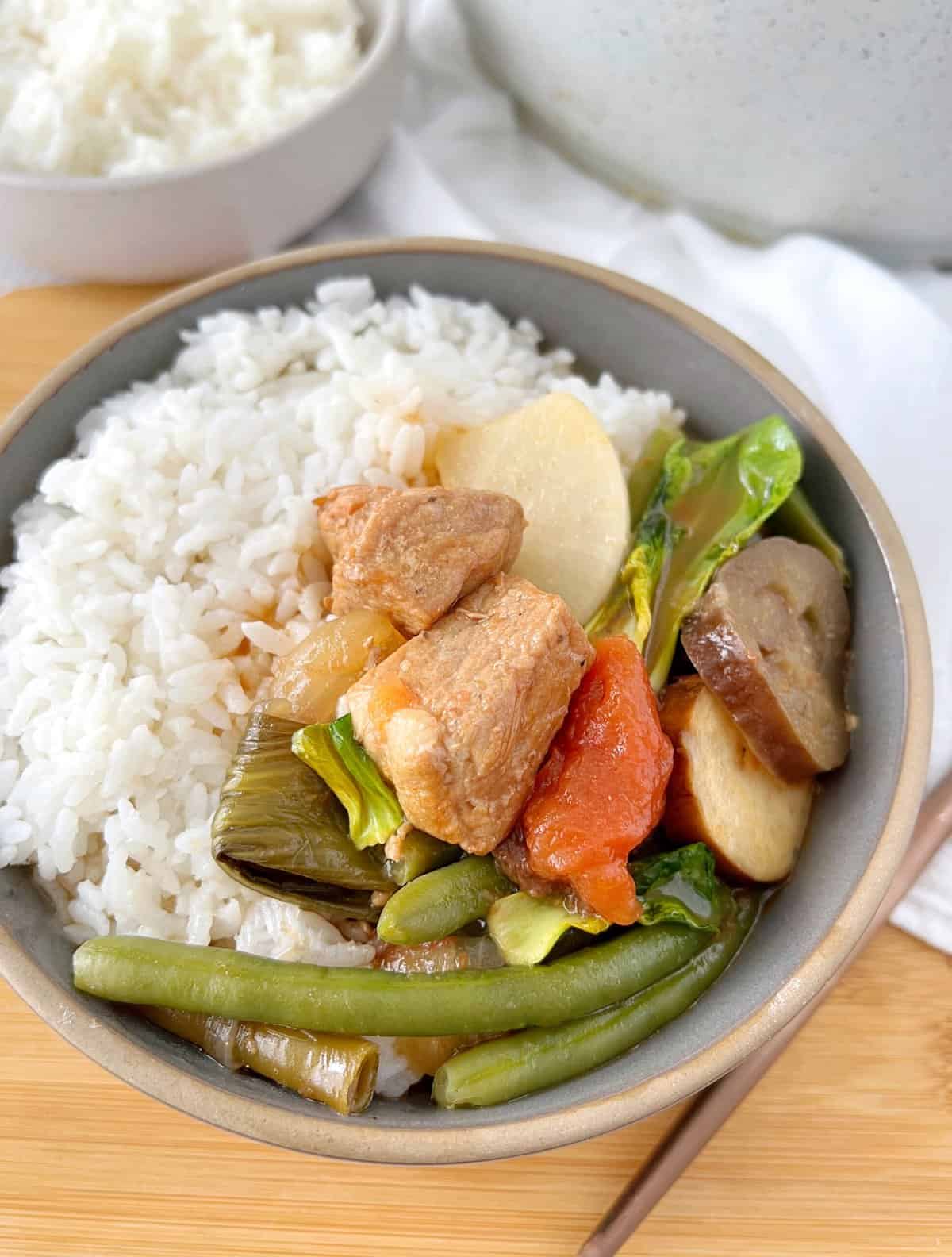
A popular Filipino soup or stew Read more
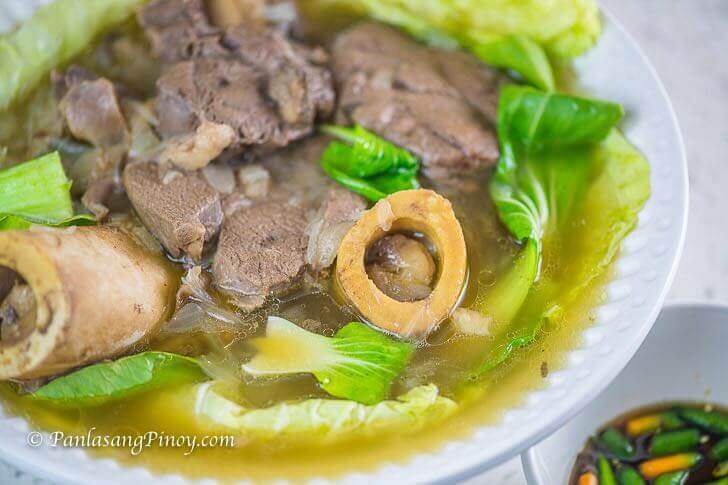
A Filipino beef dish Read more
A Filipino dish consisting of a whole roasted pig Read more
A general term in Filipino cuisine for noodles
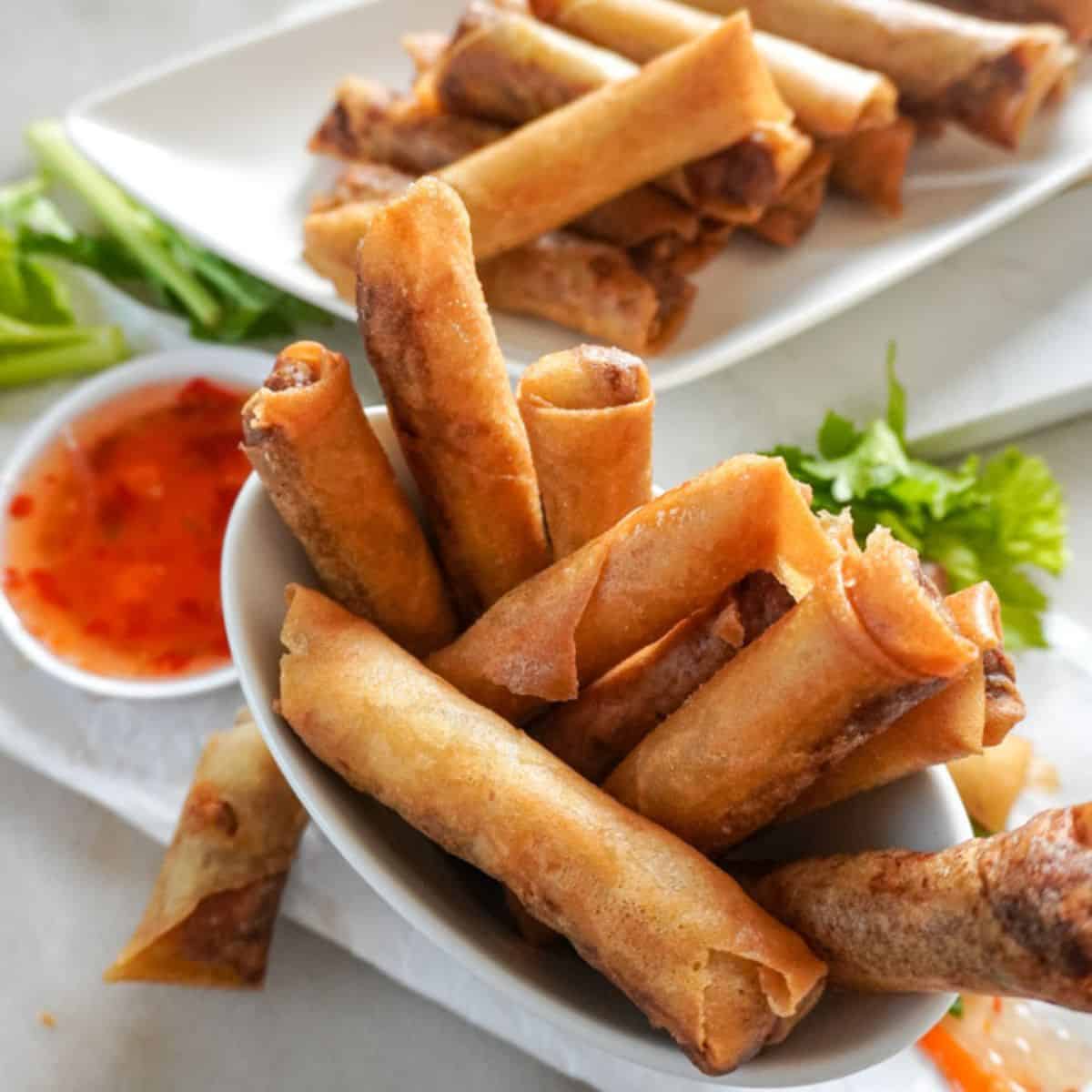
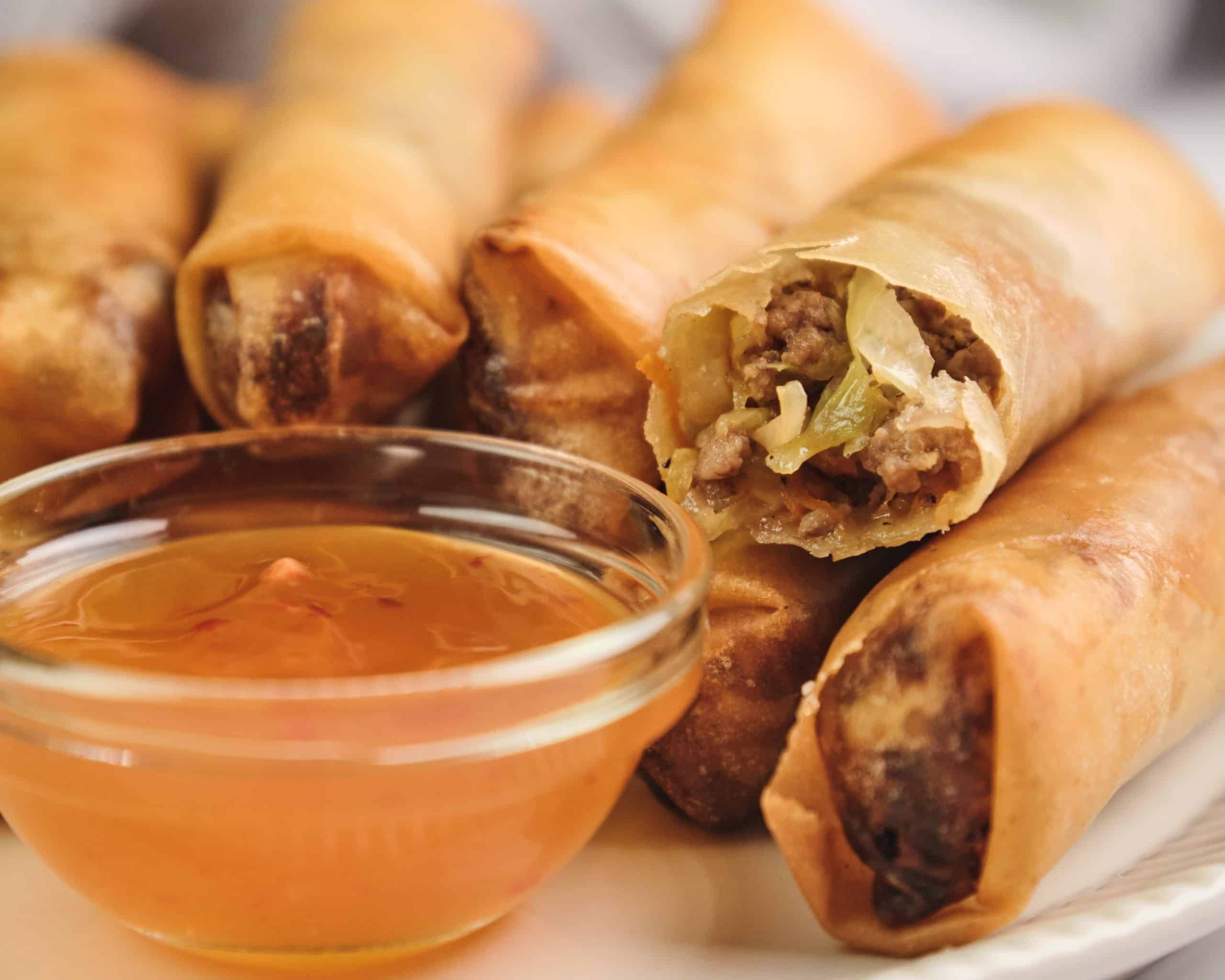
A type of savory or sweet spring roll commonly found in Indonesian and Filipino cuisines Read more
A popular Filipino breakfast dish Read more
A developing duck embryo inside a duck egg, which is boiled and eaten from the shell Read more
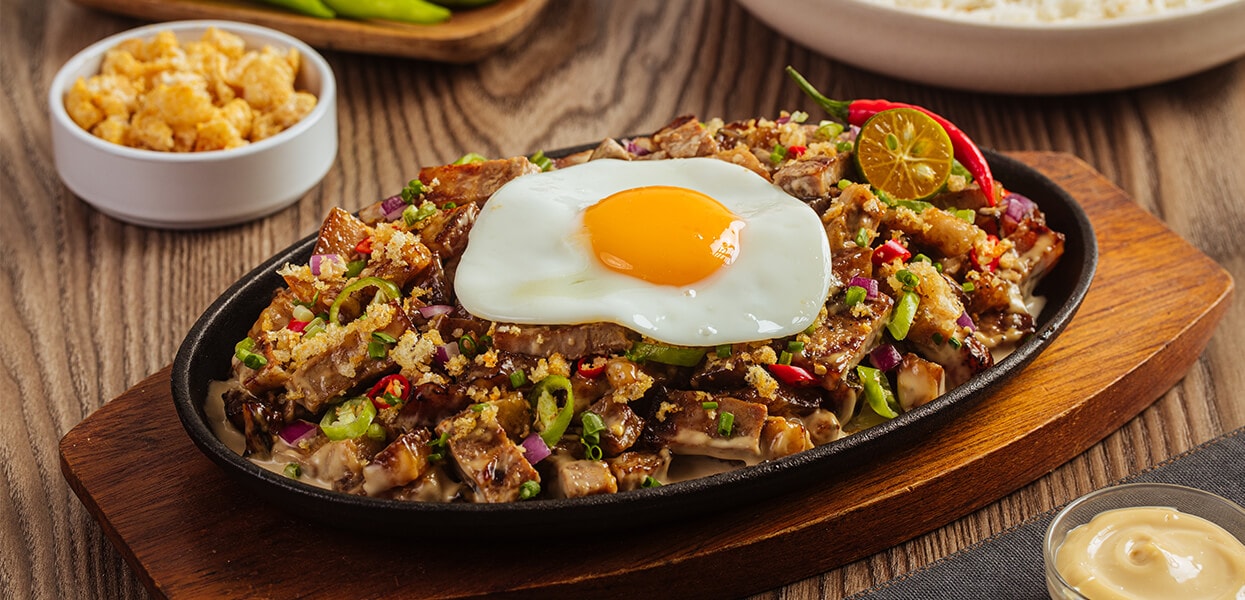
A Filipino dish made primarily from parts of a pig's head and often including chicken liver and other seasonings Read more
A classic Filipino stew characterized by its rich, savory peanut sauce and meaty flavors Read more
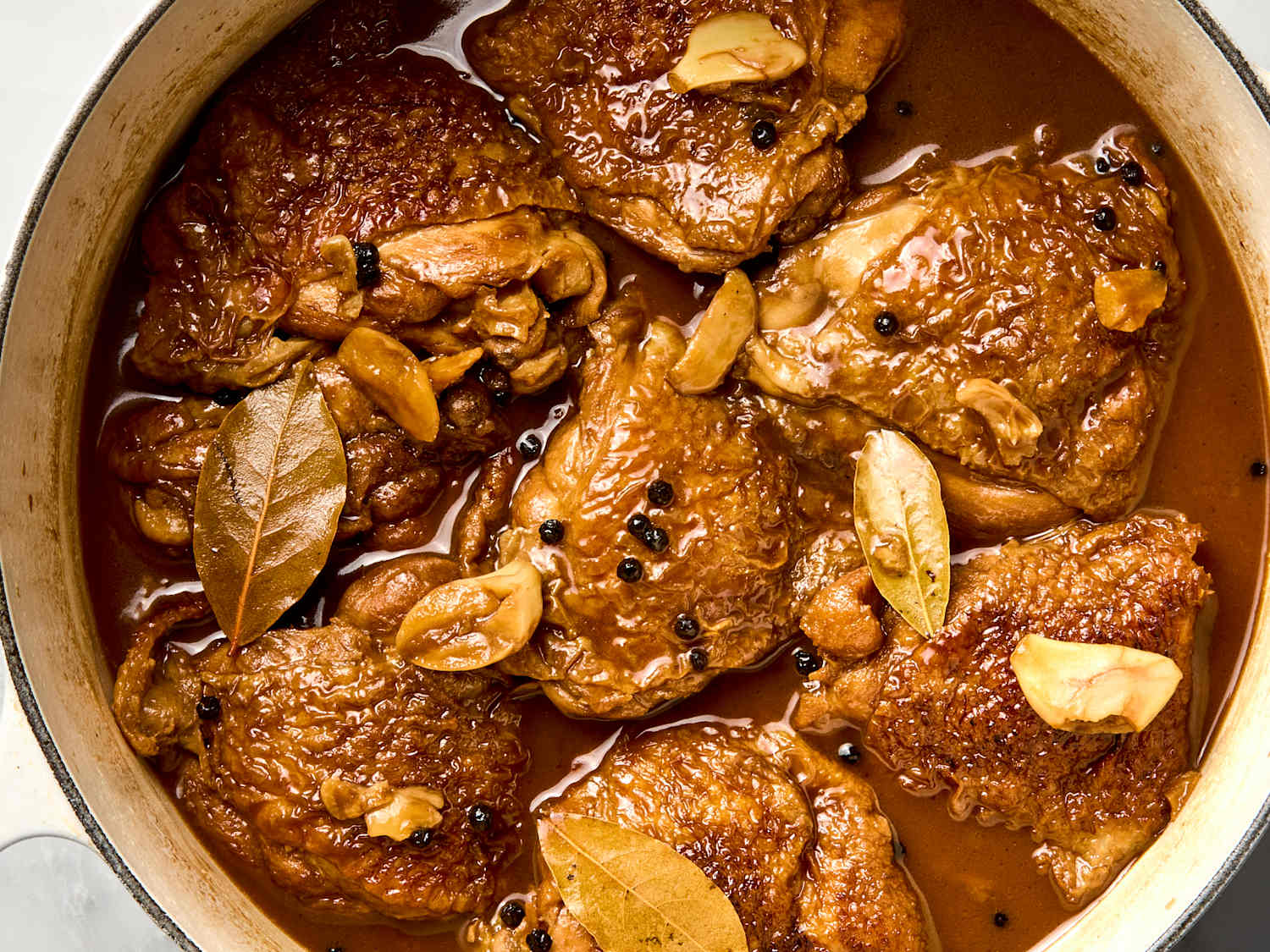
Similar to the Spanish Adobado, but with a Philippine twist, it is a dish that uses vinegar and soy sauce as the main ingredients. It is a dish that is cooked with beef, pork, or chicken in soy sauce, vinegar, garlic, and sea salt, and is a specialty of the Philippines.
Marinate the meat with soy sauce, vinegar, and spices for about 30 minutes and cook until tender.


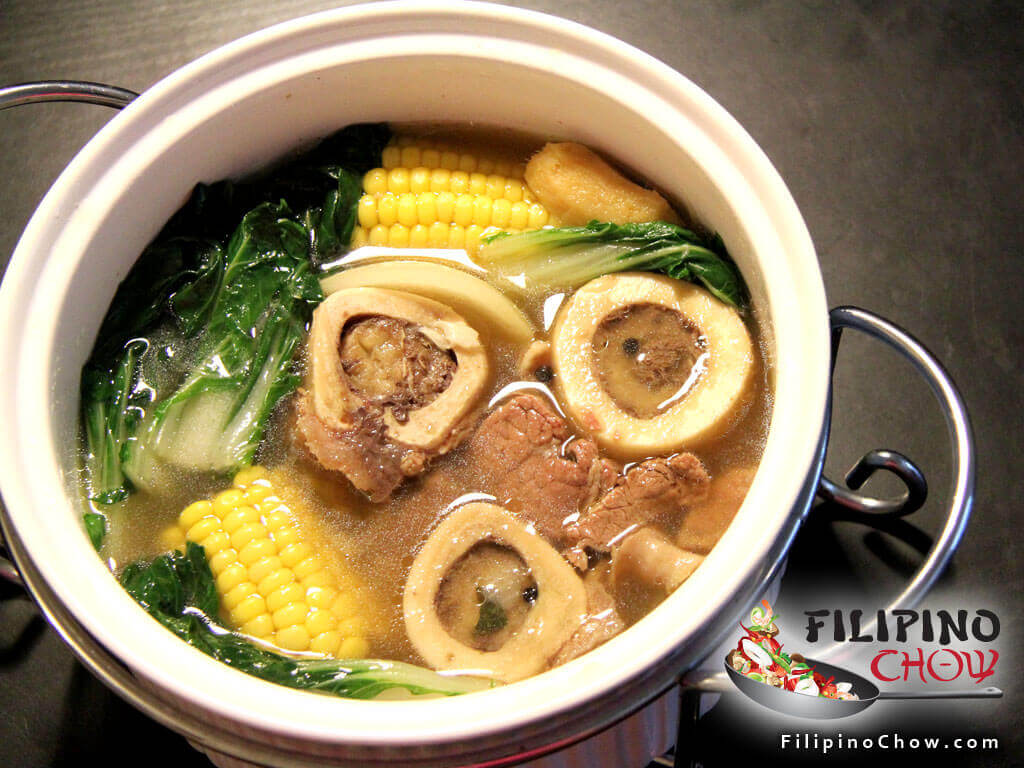
A type of soup made with pork, shrimp, and fish cooked in a spicy broth with vegetables. Similar in taste to Thai tom yum, the main source of the broth in sinnigang is tamarind.
Boil the meat and tamarind broth with water, then add the prepared vegetables and cook as a soup.

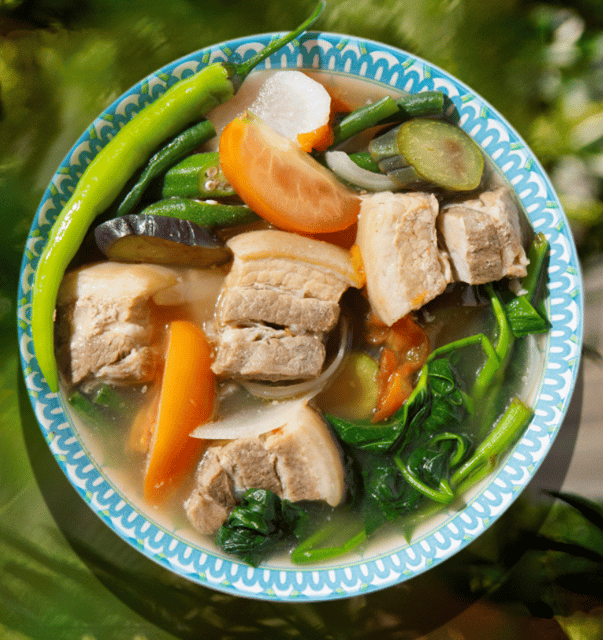
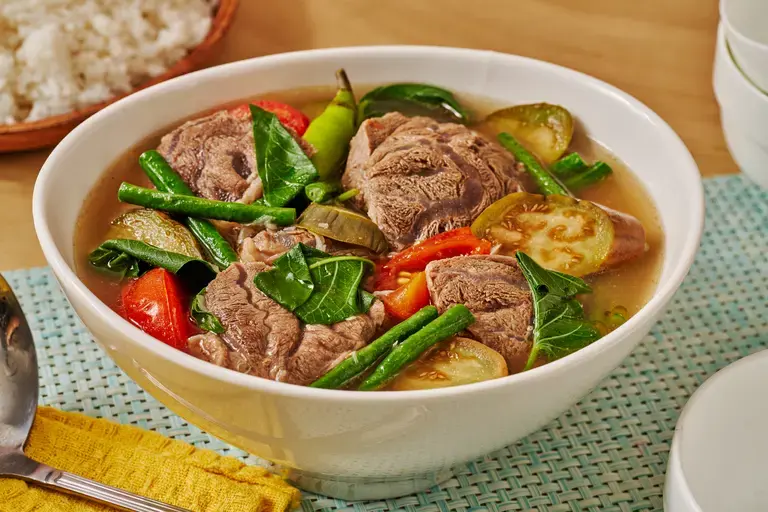
Bulalo is a Filipino beef soup, famous for its rich, flavorful broth and tender beef shanks. It's made by slow-cooking beef shanks and bone marrow until the meat is incredibly tender and the broth develops a deep, savory flavor. Commonly, it includes vegetables like corn on the cob, cabbage, and leafy greens, and is often served with rice.
            Preparation
1. Boil beef (2-3 hrs), skim scum.
2. Add corn/potatoes, simmer 15-20 mins.
3. Season with fish sauce, add greens (cook briefly).
4. Serve hot with bone marrow, rice, and calamansi.
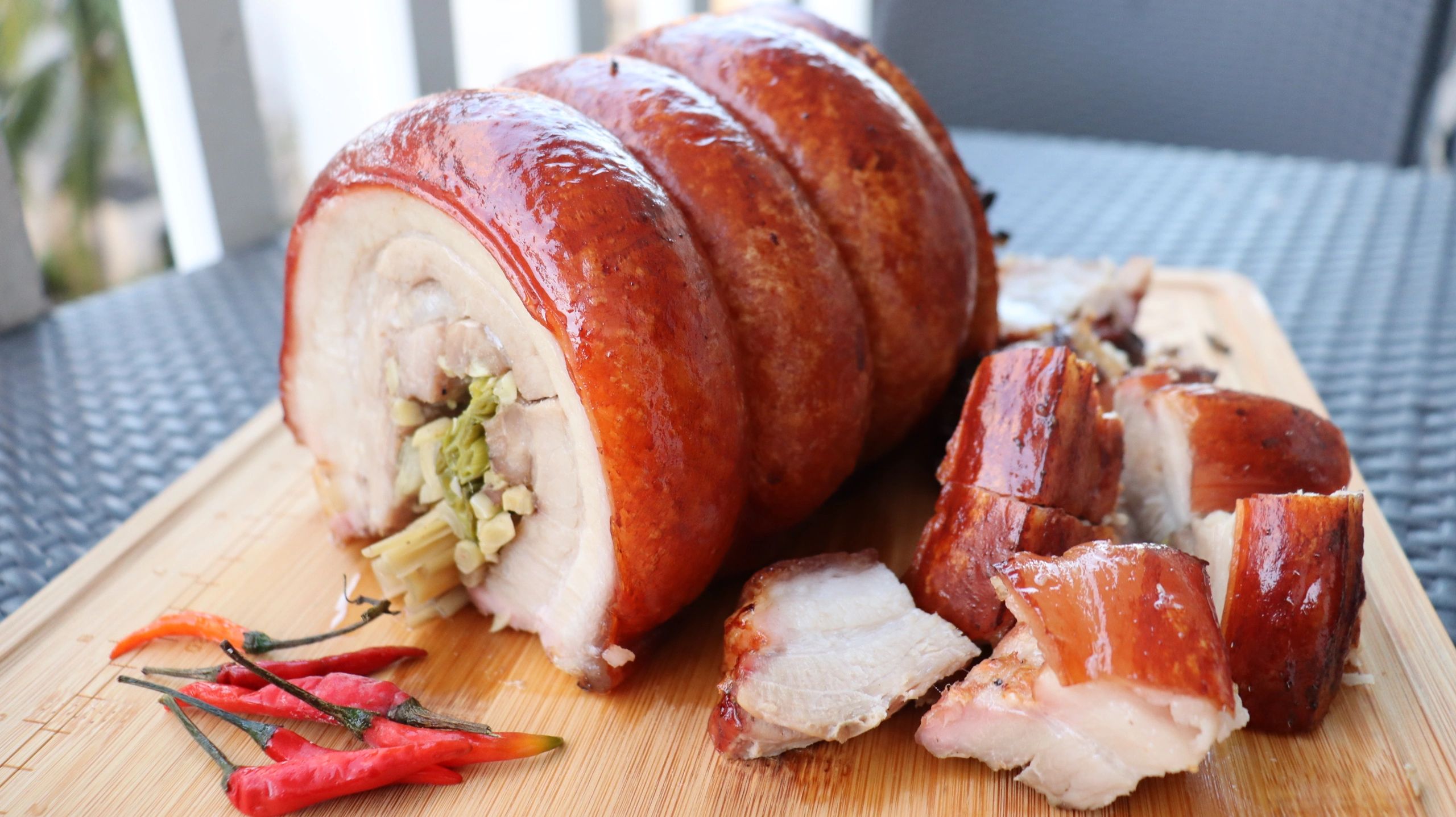
A festive dish. Similar to the Spanish Cochinillo Asado, but in the Philippines it is usually served with a coconut milk sauce. It is a whole pig roasted over a fire and prepared with crispy skin.
Put the pork belly in a roasting tin and roast for 4-6 hours until the skin is crispy.
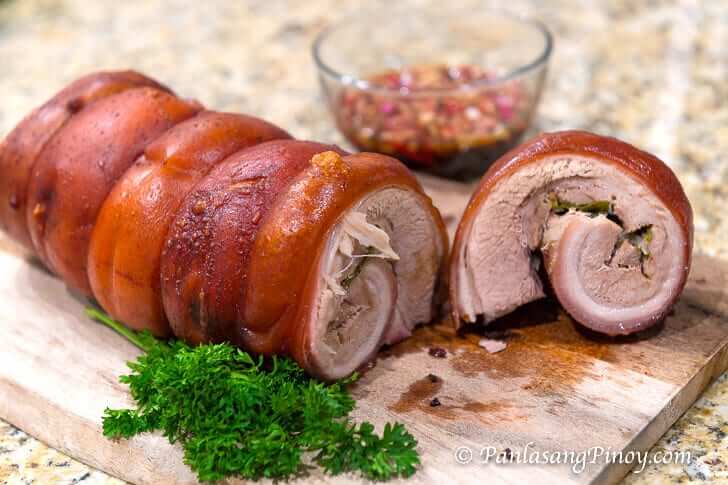
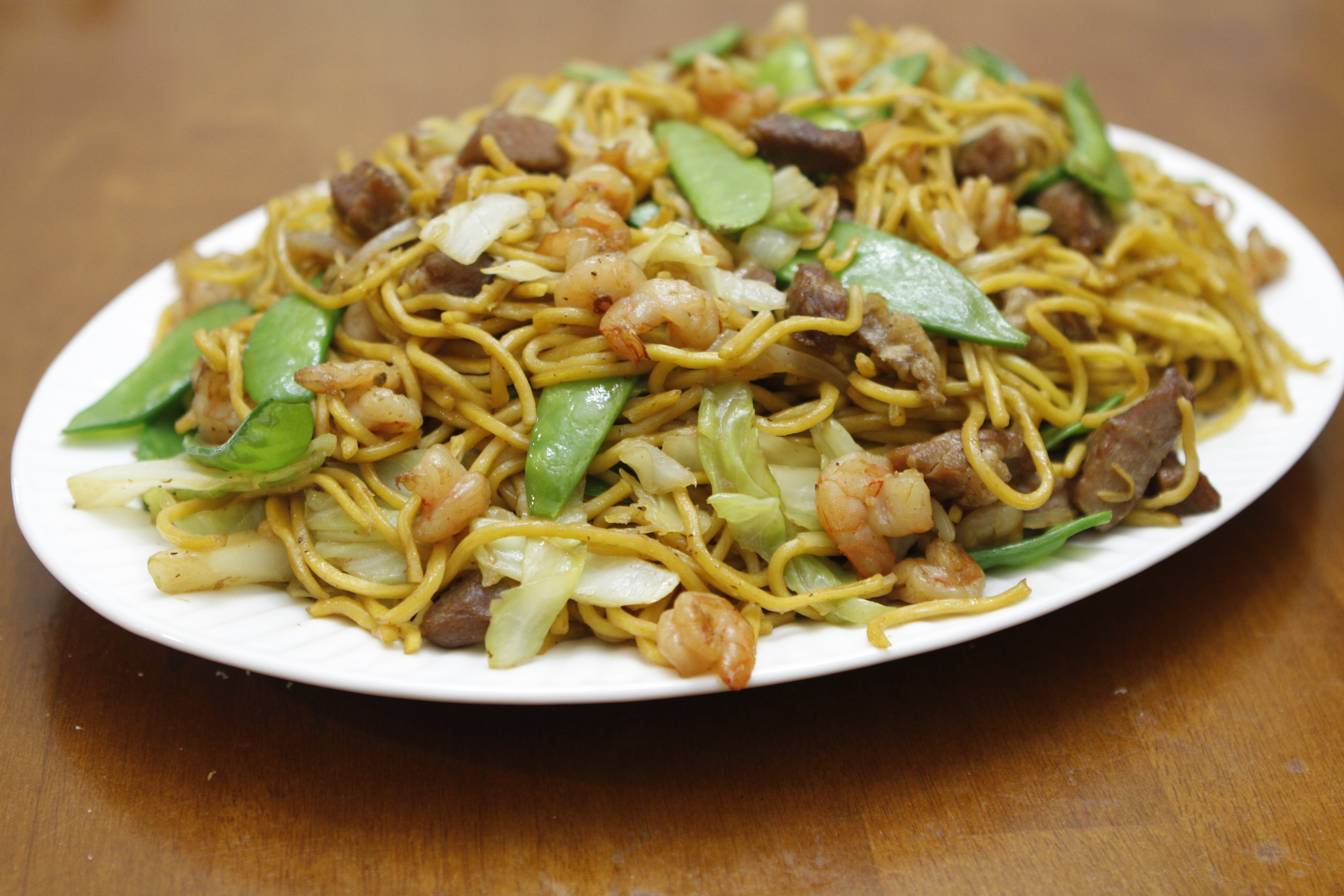
A staple food at birthday parties. Similar to Chinese (Chow Mein), but sweeter in the Philippines and often mixed with coconut milk.
Fill the noodles with meat and vegetables.


Similar to Chinese Spring Rolls, but in the Philippines it is more fatty. It is a food made by wrapping meat or vegetables in a batter and frying them.
Put the meat and vegetables in a batter and fry them.

A dish made with fried beef, egg, and fried rice. It is usually served as a breakfast dish and is similar to Korean bibimbap, but Tapsilog focuses on beef.
The beef is marinated in soy sauce and served with egg and fried rice.
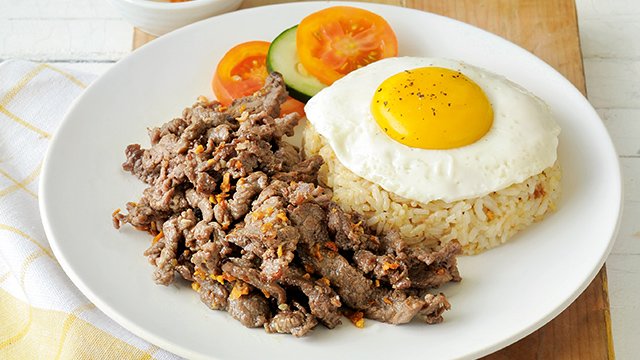
A dish made from boiled duck or quail eggs, it is a specialty of the Philippines. Similar to Vietnamese Trng vt ln, it is also a popular dish in Southeast Asia.
Duck or quail eggs are fermented for 15-20 days and boiled in hot water.
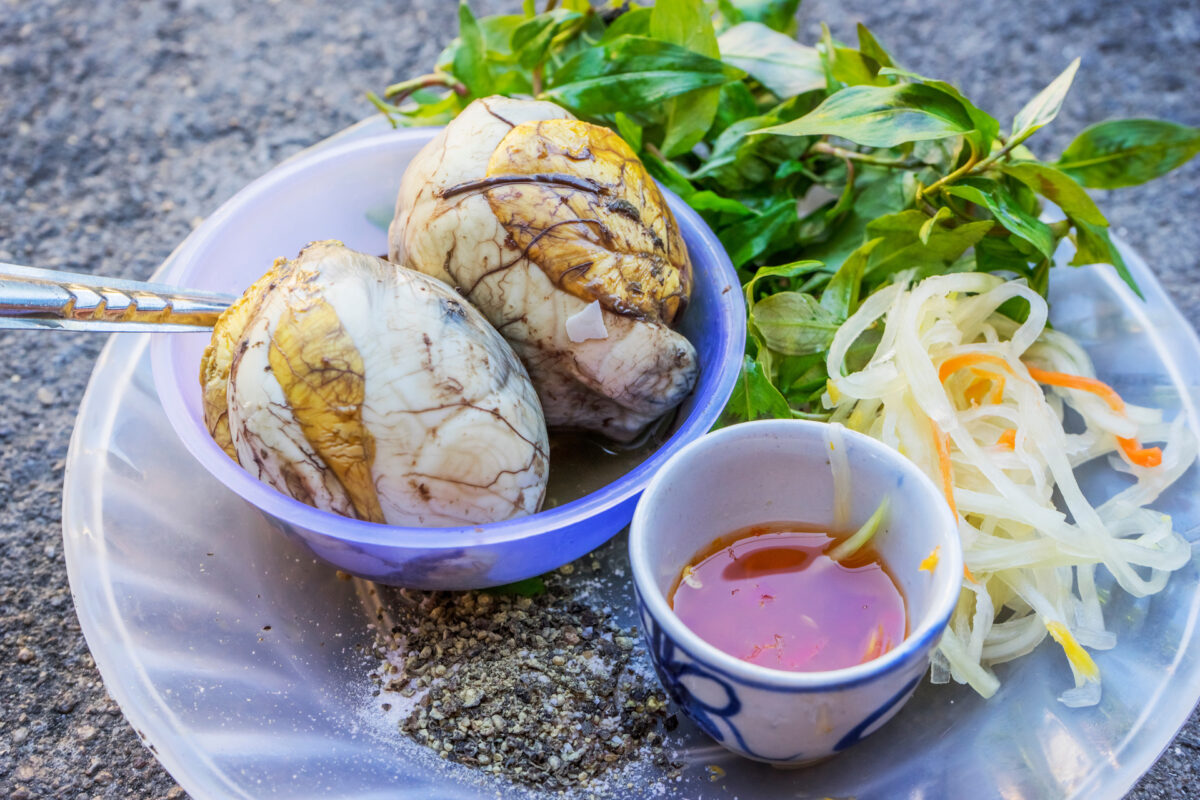
A dish made from fried pork ears and liver, marinated in garlic, chili, and vinegar, and often served with beer or liquor. Similar to Japanese Yakitori, Sisig combines pork and beef.
Pork is boiled and fried, mixed with garlic, chili and vinegar, and topped with egg yolk.
A dish of pork or beef and vegetables cooked in peanut sauce and usually served with Bagoong. Similar to Indonesian Gado-Gado, Kare-Kare focuses on meat.
Meat and vegetables are cooked in peanut sauce and served with Bagoong.