Welcome To Myanmar
FOOD & INGREDIENTS


:max_bytes(150000):strip_icc()/urban-burmas-ono-kao-sweh-6e2b18dad37042629df8f3d19b38ef90.jpg)


Mohinga
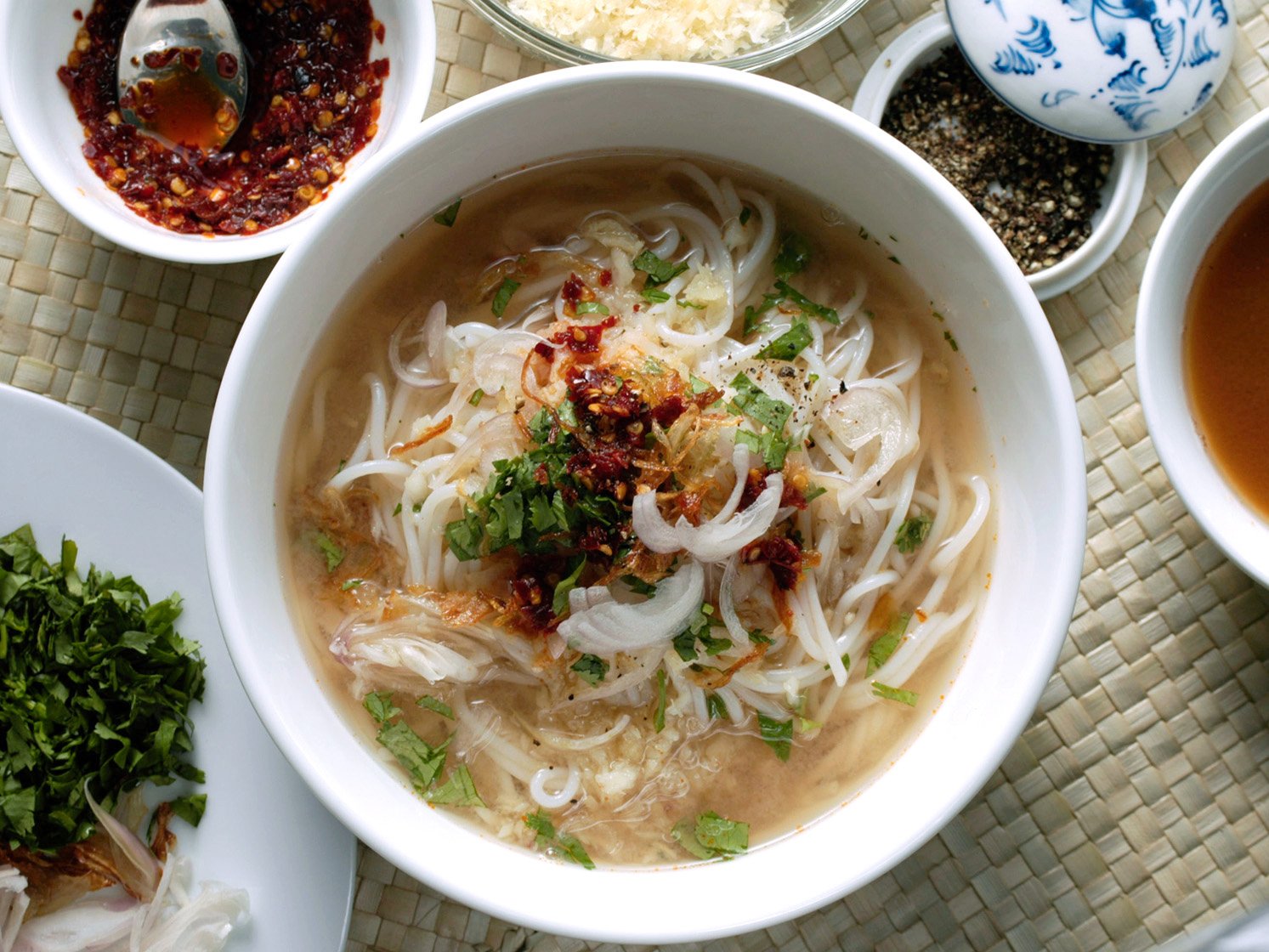
Mohinga, a popular Burmese (Myanmar) breakfast dish, features a flavorful fish broth made with ingredients like lemongrass, ginger, garlic, and various spices. The broth is typically served over rice noodles and garnished with hard-boiled eggs, cilantro, lime wedges, and crispy fried onions or fritters. Common ingredients also include fish sauce, turmeric, paprika, and rice flour (or gram flour) for thickening the broth.
Mohinga Recipe
- Simmer fish with aromatics (lemongrass, ginger, turmeric). Remove fish, flake the flesh, and strain the liquid for stock.
- Blend onions, garlic, ginger, and lemongrass into a paste.
- Sauté the paste, adding flaked fish to infuse flavors.
- Mix rice/chickpea flour with water to make a slurry. Stir into the fish stock.
- Combine stock with sautéed fish. Simmer 20-30 minutes with fish sauce and optional ingredients. Season.
- Ladle soup over rice noodles and garnish with your choice of toppings.
Lahpet thoke
Lahpet thoke, a Burmese tea leaf salad, features fermented tea leaves as its star ingredient, combined with a variety of other elements for texture and flavor. Key ingredients include shredded cabbage, sliced tomatoes, fried peas, roasted peanuts, sesame seeds, ginger, garlic, and a dressing of peanut oil, fish sauce, and lime juice. Some variations may also include dried shrimp, chilies, or even a touch of MSG for added complexity.
Lahpet thoke Recipe
- Steep and squeeze tea leaves. Blend with garlic, ginger, chilies, lime, salt, and oil. Ferment in a jar for 2-3 days.
- Fry sliced garlic until crispy. Fry soaked split peas. Toast peanuts and sesame seeds.
- Arrange cabbage in the center of a platter.
- Create separate piles of tomatoes, fried garlic, peanuts, peas, and sesame seeds around it.
- Place a scoop of the fermented tea leaf dressing in the middle.
- Drizzle with lime juice and other seasonings before tossing at the table.
Shan noodles
Shan noodles are a delicious dish featuring rice noodles in a flavorful broth, often with a minced chicken or pork topping and various garnishes. Key ingredients include rice noodles, a savory broth, minced meat (chicken or pork), and toppings like peanuts, spring onions, and pickled mustard greens.
Shan noodles Recipe
- Cook rice noodles. Toss with a little oil to prevent sticking.
- Sauté garlic and shallots. Add minced meat and brown. Stir in seasonings and tomatoes. Simmer until the sauce thickens.
- Prepare fried garlic, crushed peanuts, and chopped pickled mustard greens.
- Place noodles in a bowl. Top with the meat sauce and a generous amount of garnishes.
- Garnish with fresh cilantro and spring onions. Serve with a lime wedge and chili oil.
Nan Gyi Thoke
Nan Gyi Thoke, a Burmese noodle salad, features thick rice noodles, chicken curry, and various toppings. Key ingredients include: chicken, rice noodles, fish sauce, onions, garlic, cilantro, paprika, turmeric, chickpea flour, chili oil, boiled eggs, and crispy fried noodles.
Nan Gyi Thoke Recipe
- Sauté aromatics and spices. Add chicken and brown. Simmer in stock until tender, letting the oil separate.
- Toast chickpea flour in a dry pan until it's light golden and nutty.
- Cook noodles. Prepare garnishes like sliced eggs and chopped herbs.
- In a bowl, toss noodles with curry oil, chicken curry, toasted chickpea flour, and seasonings.
- Plate the mixed noodles. Top with prepared garnishes and serve with chili oil on the side.

Meeshay
Meeshay, a Burmese noodle dish, typically includes rice noodles, a meat-based sauce (often chicken or pork), and various toppings and condiments. Key ingredients often involve bean sprouts, tomatoes, onions, garlic, and spices like turmeric, red chili powder, and salt. Sauces include fish sauce, oyster sauce, yellow soybean paste, and sometimes a rice flour gel or a dressing of fried peanut oil and chili oil. Garnishes can include fried onions, coriander, spring onions, and pickled vegetables.
Meeshay Recipe
- Cook rice noodles, rinse, and toss with oil.
- Sauté garlic, brown minced meat, and stir in soybean paste, soy sauce, sugar, and broth. Simmer.
- Blanch bean sprouts, chop pickled mustard greens, and prepare other toppings. (Optional: make starch jelly).
- Place noodles in a bowl. Top with meat sauce and arrange garnishes around them.
- Drizzle with chili oil and lime juice. Mix and enjoy.
Ohn No Khao Swe
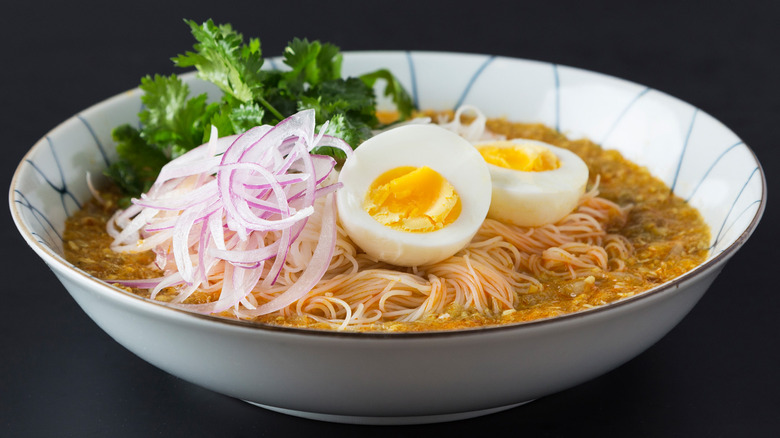
Ohn No Khao Swe, a Burmese dish, features a rich coconut milk broth, noodles, and various toppings. Key ingredients include chicken, coconut milk, chickpea flour (also known as gram flour), and egg noodles. Spices like turmeric, paprika, and ginger are also essential, along with garnishes such as crispy fried onions, hard-boiled eggs, and lime wedges.
Ohn No Khao Swe Recipe
- Sauté a blended paste of onion, garlic, ginger, and turmeric.
- Add chicken and cook. Pour in coconut milk and chickpea flour slurry, then simmer until thick and creamy.
- Cook and drain egg noodles or wheat noodles.
- Prepare toppings, including sliced shallots, crispy fried noodles, hard-boiled eggs, and lime wedges.
- Place noodles in a bowl, ladle the hot coconut broth over them, and top with all the garnishes.
Rakhine Mont Ti
Rakhine Mont Ti, a popular Rakhine noodle dish, primarily features rice noodles and a flavorful fish-based broth. Key ingredients include fish (often yellow pike conger), fish sauce, shrimp paste, garlic, ginger, and various spices like black pepper and turmeric. It's known for its spicy and sour taste, with optional additions like chili flakes, chili oil, and fried onions.
Rakhine Mont Ti
- Simmer fish with aromatics (lemongrass, garlic, ngapi). Strain the broth and set aside.
- Flake the cooked fish, then fry it with turmeric until dry and crispy.
- Pound green or red chilies and garlic into a spicy paste.
- Cook thin rice noodles as directed.
- Place noodles in a bowl. For the soup, ladle the hot, clear broth over the noodles.
- For the salad, mix the noodles with tamarind juice, chili paste, and a little garlic oil.
- Top with crispy fish flakes, fried garlic, and fresh cilantro.
Thingyan rice
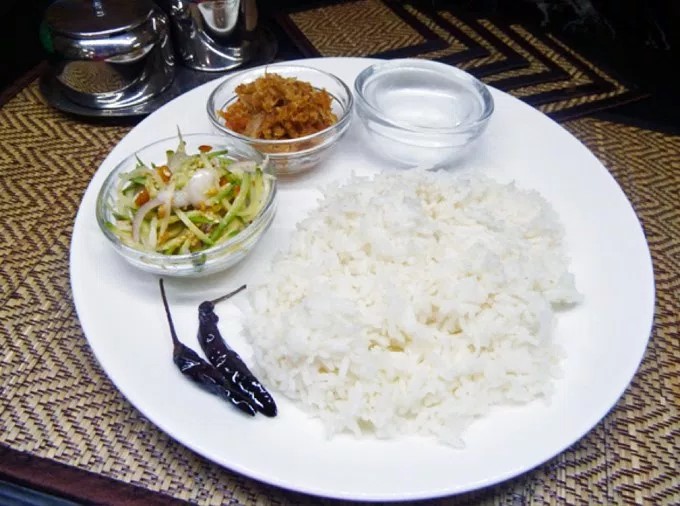
Thingyan rice, a dish traditionally enjoyed during the Myanmar New Year water festival (Thingyan), typically includes rice, dried fish, green mango, onion, fish or shrimp paste, turmeric powder, oil, salt, dried chili, and a small candle. The dish is known for its unique combination of flavors and textures, often featuring crispy fried dried fish, sour pickled mango, and fragrant rice.
Thingyan Rice Recipe
- Burn a candle under a clay pot to infuse water with a smoky aroma.
- Soak cooked rice in this scented water until it's soft.
- Boil dried fish, flake the flesh, and fry it with onions, turmeric, and chili until crispy.
- Put the scented rice in a bowl, add a ladle of cold water (often ice water), and serve with the fried fish, pickled mango salad, and fried chili.
Shwe Taung noodles
Shwe Taung noodles, also known as Gold Mountain Noodles (Shwe Taung Kawkswe), feature a combination of wheat noodles, chicken, and coconut cream, often served with a flavorful broth and garnished with cilantro, onions, and fried noodles. The dish is known for its blend of savory and spicy flavors, with ingredients like chicken, coconut milk, and chili oil contributing to the taste.
Shwe Taung noodles Recipe
- Sauté a blended paste of onions, garlic, and ginger with turmeric and paprika.
- Add chicken and cook, then stir in coconut milk, chickpea flour slurry, and seasonings.
- Simmer until the curry is thick and the chicken is tender.
- Cook egg noodles until al dente.
- Prepare toppings, including crispy fried noodles, sliced raw onions, and chili flakes.
- Place noodles in a bowl, ladle the chicken coconut curry over them, and top with all the garnishes.
Tofu Nway
Tofu Nway, a popular Shan State dish from Myanmar, is made primarily from chickpea flour and water, and is known for its soft, creamy texture. It's served warm and typically topped with a variety of ingredients like fried garlic, crushed peanuts, chili oil, and cilantro. The dish is a testament to the resourceful Shan culinary heritage.
Tofu Nway Recipe
- Mix chickpea flour, water, and turmeric into a slurry.
- Cook this mixture over low heat, stirring constantly, until it thickens into a soft, creamy tofu-like pudding.
- Prepare a sauce by cooking minced pork or chicken with a savory tomato and spice blend.
- Boil thin rice noodles, then drain and set aside.
- Place a scoop of the warm tofu base in a bowl.
- . Top with a spoonful of the meat sauce, a portion of the noodles, and garnish with fresh cilantro, spring onions, and chili flakes.
Shan-style rice
Shan-style rice, also known as Htamin Jin or Nga Htamin, typically includes cooked rice, tomatoes, fish (often freshwater fish like those from Inle Lake), potatoes, and garlic. It often features turmeric, fish sauce, and is topped with fried garlic and other garnishes.
Shan-style rice Recipe
- Cook rice according to package directions, potentially adding turmeric.
- Boil, mash, or blend tomatoes.
- If using, boil, mash, or fry the fish.
- Boil, peel, and mash. li>
- Sauté onions and garlic in oil.
- Mix the cooked rice with mashed tomatoes, potatoes (if using), and fish (if using).
- Add salt, turmeric, and other spices to taste.
- Top with chili oil, fried onions, peanuts, and other garnishes.
Mont Lone Yay Paw
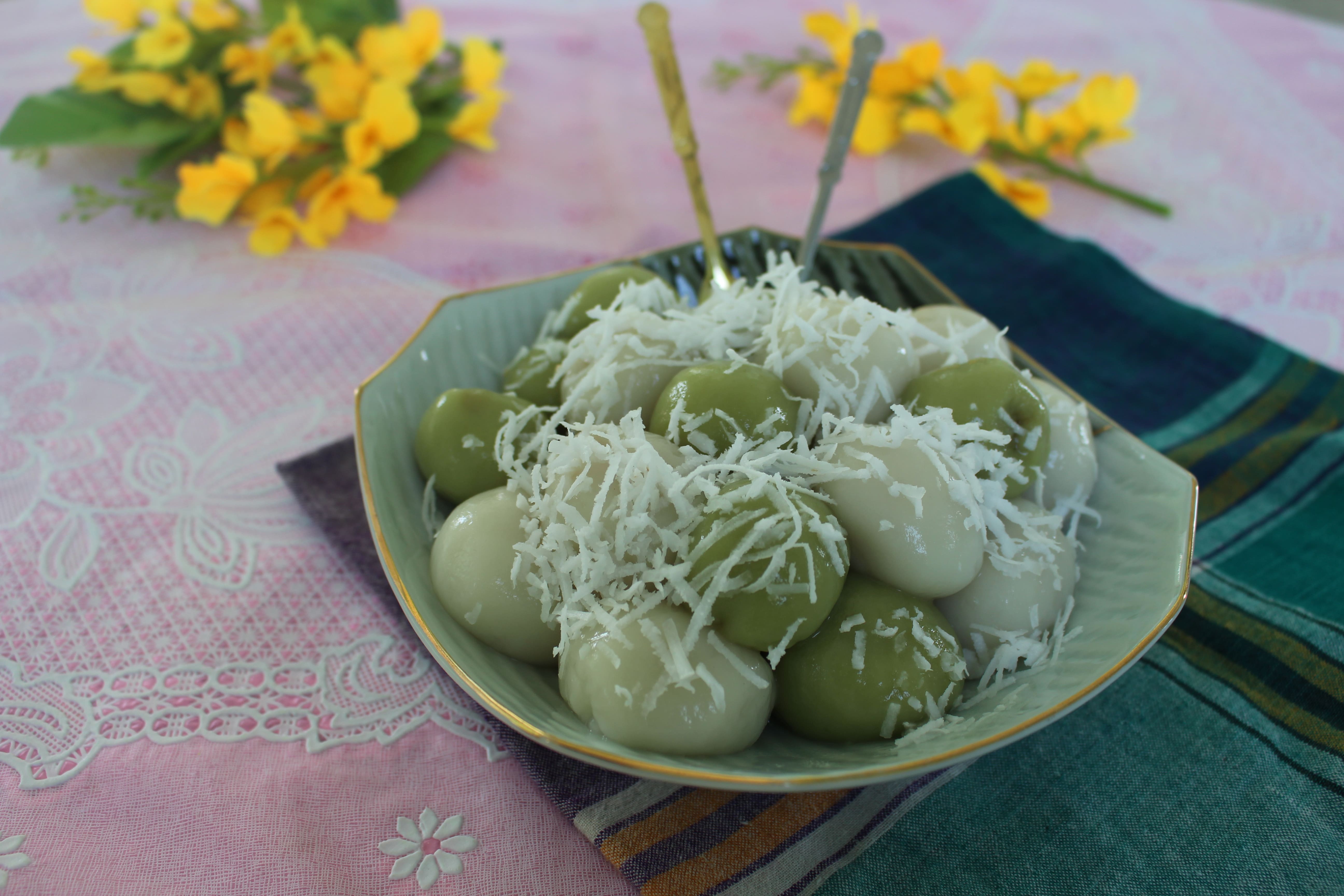
Mont Lone Yay Paw, a traditional Burmese snack, primarily consists of glutinous rice flour, rice flour, water, and salt. The dough is filled with palm jaggery (or palm sugar) and often topped with shredded coconut. It's a popular treat during the Thingyan (Water Festival) in Myanmar.
Mont Lone Yay Paw Recipe
- Mix glutinous rice flour with a pinch of salt.
- Gradually add water until a soft, smooth dough forms (not too sticky).
- Pinch off a piece of dough, flatten it in your palm, and place a small chunk of palm sugar in the center.
- Wrap the dough around it to make a smooth ball.
- Drop the rice balls into boiling water. They’re done when they float to the surface.
- Serve them in a bowl with fresh grated coconut on top.